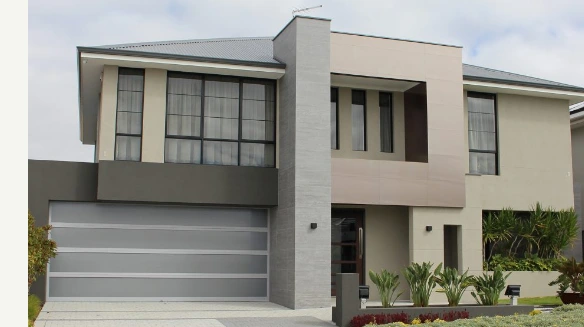
Understand the movement first.
Unlike a door made from several moving sections, a tilt arrangement uses one panel. The way it moves affects the space around the opening. Before focusing on the finish, discuss the driveway, nearby walls and where vehicles stand while the door operates. A suitable solution needs to accommodate the full movement path, not only the appearance of the closed panel.
Clearance deserves a closer look.
A sloping driveway or a vehicle parked close to the opening can change what works in practice. Do not assume that a door suitable for a neighbouring property will behave the same way at yours. Photograph the approach as well as the opening, and mention any planned changes to paving or finished levels. These details help keep the door choice connected to the completed site.
Bring the material brief to the discussion.
If the attraction is a particular architectural finish, explain the look you are trying to achieve rather than choosing the operating system in isolation. Panel construction, supporting hardware and the selected material need to work together. A heavier or different cladding should not be treated as a cosmetic addition to an existing door without appropriate assessment. Product and project suitability come before a visual promise.