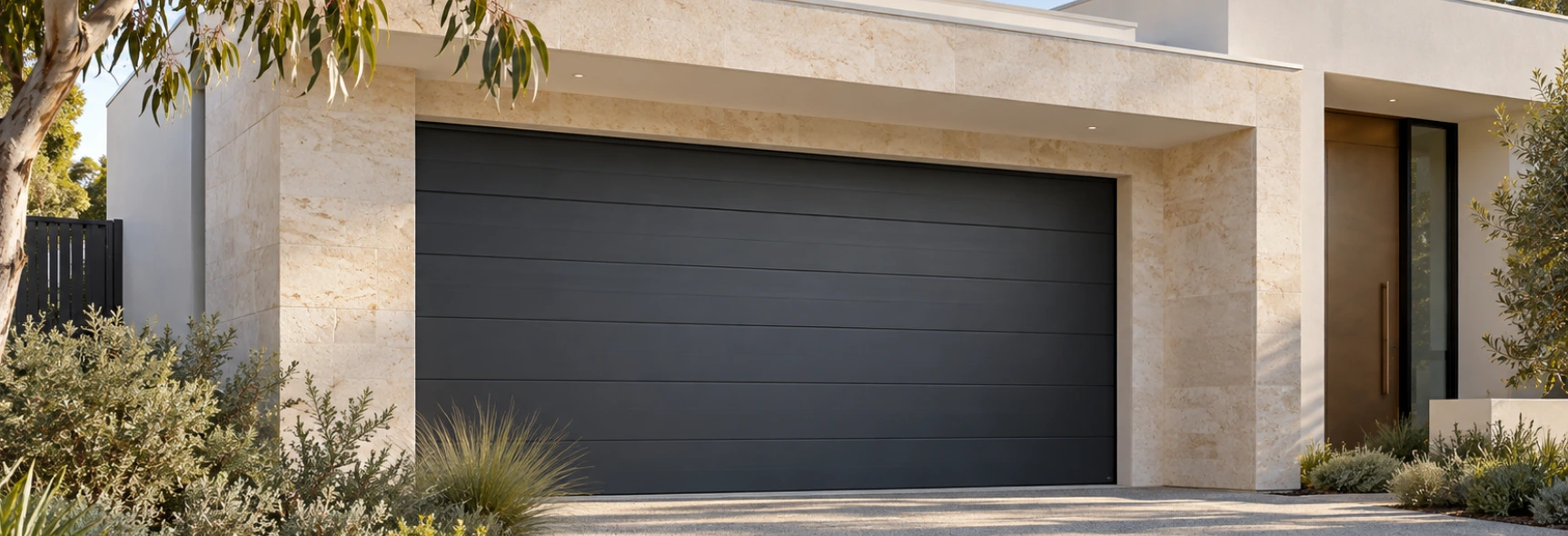
Build a palette around the house.
Gather the roof, window, brick, render and paving colours before selecting the garage finish. They do not all need to match, but they should feel intentional together. If the garage occupies much of the frontage, consider whether you want it to recede or become a feature. A sample viewed beside the actual materials is more useful than a colour selected in isolation.
Colour and profile work together.
Panel lines, texture and the direction of the light affect how a finish is perceived. A darker colour can emphasise one profile and soften another; a timber-look pattern introduces a different visual rhythm. Compare the selected finish on the intended door range, rather than assuming that a photograph of another system shows exactly what will be supplied.
Quiet neutrals
A restrained backdrop that can connect the door to render, stone or roofing.
Deeper tones
A more defined contrast, considered alongside the rest of the frontage.
Timber-look warmth
A textured direction that brings another material reference into the palette.
Confirm with a physical sample.
Colour on a phone or monitor is only a guide. Lighting, photography and screen settings can shift both tone and contrast. Review an appropriate current sample before final approval, and confirm the exact product, colour name and finish in the specification. For a replacement door, allow for the fact that nearby existing finishes may have changed with age and weather exposure.
Choose for the location as well as the look.
Ask about care requirements and product suitability for the property, particularly where the door is exposed to coastal conditions. Finish appearance does not establish corrosion resistance or a site-specific wind rating. Those questions belong to the selected product and installation assessment. A considered choice combines the desired frontage with a clear understanding of the surface you will be maintaining.